
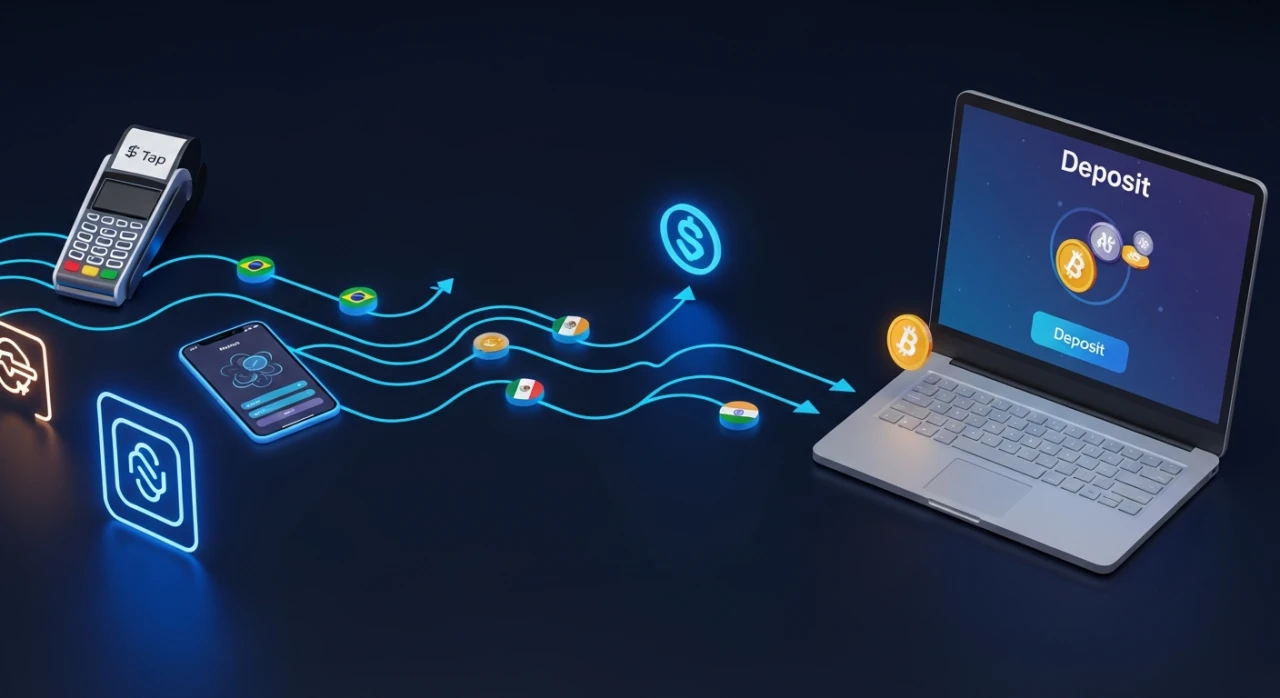
Transak has deepened its integration with multiple crypto gambling platforms by expanding supported fiat currencies and local payment methods tailored for operators targeting Latin America and Southeast Asia. The payment infrastructure provider has added enhanced regional rails that allow seamless fiat-to-crypto conversions directly into player wallets on licensed iGaming sites.
This move addresses a key friction point for crypto casinos: converting local fiat into supported cryptocurrencies without high fees or delays. Operators can now offer deposits in currencies such as BRL, MXN, INR, and IDR through familiar local methods including bank transfers, e-wallets, and cards, with automatic conversion into BTC, ETH, USDT, SOL, or other tokens.
Key Takeaways
- Improved accessibility: Players in emerging crypto-friendly markets gain easier on-ramps, reducing barriers to entry for fiat users entering blockchain-based casinos.
- Lower friction UX: Near-instant funding with competitive fees enhances deposit speeds and player retention compared to traditional crypto-only flows.
- Compliance-ready: Built-in KYC/AML screening during the on-ramp process helps operators meet jurisdictional requirements in regulated markets.
Transak’s infrastructure leverages API connections that embed directly into casino deposit pages. When a player selects a local payment option, funds are converted on the backend via partnered liquidity providers and settled on-chain. For high-speed networks like Solana, users see credits appear in seconds with transaction fees often under $0.01, while Polygon or Arbitrum integrations keep costs low on Ethereum-compatible tokens.
The expansion focuses on regions with growing crypto adoption and relatively permissive or emerging gambling frameworks outside the US. In Latin America, where crypto usage has surged for remittances and daily transactions, operators benefit from reduced abandonment rates during onboarding. Southeast Asian markets similarly see demand for hybrid fiat-crypto experiences that respect local banking preferences while delivering blockchain advantages like transparent, provably fair games and rapid withdrawals.
From a technical standpoint, Transak handles the off-ramp complexity—verifying payment sources, applying sanctions screening, and routing to supported blockchains—freeing casino operators to focus on game content and retention. Settlement times vary by method but typically complete within minutes, far faster than many legacy banking rails. This setup also supports stablecoin preferences, minimizing volatility exposure for both players and platforms.
Regulatory context remains important: operators using such on-ramps must layer their own transaction monitoring and source-of-funds checks, particularly when serving players in jurisdictions with active AML oversight such as parts of Europe, Canada, or Australia. Transak’s compliance features, including Travel Rule support where applicable, assist in meeting these obligations without disrupting the fast, low-cost user experience that defines modern crypto casinos.
For operators, the partnership lowers customer acquisition costs by making platforms more approachable to non-crypto natives while preserving the speed and transparency of blockchain payouts. Challenges include varying KYC thresholds across regions and ensuring seamless fallback options during network congestion.
This development underscores continued maturation of the fiat-crypto bridge in iGaming. As more providers enhance regional coverage, crypto casinos gain tools to scale responsibly in global markets that value both regulatory alignment and superior player experience.
Sources: Transak official integration announcements and industry payment reports.